Showing posts with label melancholy. Show all posts

Thursday, 8 December 2016

Don't Worry Be Grumpy (Ajahn Brahm)


Rating:★★★★★
Category:Books
Genre: Spiritual
Tagline:Practical Tools from Ajahn Brahm
As well as being full of wisdom and laugh-out-loud stories, there are also several practical tips in Ajahn Brahm’s book, “Don’t Worry, Be Grumpy” which I’d love to share. But these are just selective reminders — you’ve got to go read the book!

1) Let go of painful memories. We only keep beautiful photos to surround ourselves with. So too we should keep only beautiful memories and let go of memories that cause suffering.

2) Water the goodness in others and in yourself with attention and love. Instead of trying to “fix” what is unwholesome, let it wither away.

3) Accept praise. You deserve it. But do not compare yourselves with others. 

4) Give praise generously and sincerely. Criticism strikes home at once, but praise takes fifteen seconds to get through. If the need arises for constructive criticism, then use the sandwich technique.

5) Lower expectations, and change your attitude. See the goodness in others, and the beauty in ugliness. If you cannot see it, imagine it!

6) Be a visitor to your own home at least one day a week to let go of the feeling of ownership and the need to control things. Be instead a watcher.

7) Enjoy the in-between moments in life. Enjoy the journey, not only the destination.

8) If you need to make a decision, toss a coin to test out how you feel.

9) In life and death situations, ask for permission: from your pet, from your loved one.

10) In looking after someone, focus on caring, not curing; the process, not the endpoint. If we focus on curing, then we will sometimes fail and guilt will follow. If we focus on caring, we know we gave our best.

11) In a relationship, don’t think of yourself. Don’t think of the other! Think only of us!!

12) If you try to capture a moment in a photograph or in words, you might miss it. Stay present, and experience with wonder. Then it will be unforgettable.

13) Promise honesty with your loved ones and commitment to work together. Honesty and forgiveness are much more important than hiding and covering our mistakes.

14) Let go: both what you love and what you hold onto. What you love will come back if the love is reciprocated and what you hold onto, take a break, and you can always get back to it.

15) Live simply.

16) Cultivate loving kindness.

17) Make wholesome things forbidden and they become more attractive.

18) Eat the food, not the menu. Practice, don’t just preach.

19) 20 push-ups every morning. Pushing up the corners of your lips.

20) Happy or grumpy, you have Ajahn Brahm’s permission… it’s ok!

Wednesday, 29 May 2013

Four Poems of Love & Longing (Ella Wheeler Wilcox)

Four perfect poems of Love & Longing by Ella Wheeler Wilcox.


A FATAL IMPRESS

A little leaf just in the forest's edge,
All summer long, had listened to the wooing
Of amorous birds that flew across the hedge,
Singing their blithe sweet songs for her undoing.
So many were the flattering things they told her,
The parent tree seemed quite too small to hold her.

At last one lonesome day she saw them fly
Across the fields behind the coquette summer,
They passed her with a laughing light good-bye,
When from the north, there strode a strange new comer;
Bold was his mien, as he gazed on her, crying,
"How comes it, then, that thou art left here sighing!

"Now by my faith thou art a lovely leaf —
May I not kiss that cheek so fair and tender?"
Her slighted heart welled full of bitter grief,
The rudeness of his words did not offend her,
She felt so sad, so desolate, so deserted,
Oh, if her lonely fate might be averted.

"One little kiss," he sighed, "I ask no more —"
His face was cold, his lips too pale for passion.
She smiled assent; and then bold Frost leaned lower,
And clasped her close, and kissed in lover's fashion.
Her smooth cheek flushed to sudden guilty splendour,
Another kiss, and then complete surrender.

Just for a day she was a beauteous sight,
The world looked on to pity and admire
This modest little leaf, that in a night
Had seemed to set the forest all on fire.
And then — this victim of a broken trust,
A withered thing, was trodden in the dust.


THE KINGDOM OF LOVE

In the dawn of the day, when the sea and the earth
    Reflected the sunrise above,
I set forth, with a heart full of courage and mirth,
    To seek for the Kingdom of Love. 

I asked of a Poet I met on the way,
    Which cross-road would lead me aright,
And he said: "Follow me, and ere long you will see
    Its glistening turrets of Light."

And soon in the distance a city shone fair;
    "Look yonder," he said, "there it gleams!"
But alas! for the hopes that were doomed to despair,
    It was only the Kingdom of Dreams.

Then the next man I asked was a gay cavalier,
    And he said: "Follow me, follow me."
And with laughter and song we went speeding along
    By the shores of life's beautiful sea,

Till we came to a valley more tropical far
    Than the wonderful Vale of Cashmere,
And I saw from a bower a face like a flower
    Smile out on the gay cavalier,

And he said: "We have come to humanity's goal —
    Here love and delight are intense."
But alas! and alas! for the hope of my soul —
    It was only the Kingdom of Sense.

As I journeyed more slowly, I met on the road
    A coach with retainers behind,
And they said: "Follow us, for our lady's abode
    Belongs in the realm you would find."

'Twas a grand dame of fashion, a newly-wed bride;
    I followed, encouraged and bold.
But my hope died away, like the last gleams of day,
    For we came to the Kingdom of Gold.

At the door of a cottage I asked a fair maid.
    "I have heard of that Realm," she replied,
"But my feet never roam from the Kingdom of Home,
    So I know not the way," and she sighed.

I looked on the cottage, how restful it seemed!
    And the maid was as fair as a dove.
Great light glorified my soul as I cried,
    "Why, home is the Kingdom of Love!"


IN THE GARDEN

One moment alone in the garden,
    Under the August skies;
The moon had gone but the stars shone on, —
    Shone like your beautiful eyes.

Away from the glitter and gaslight,
    Alone in the garden there,
While the mirth of the throng, in laugh and song,
    Floated out on the air.

You looked down through the starlight,
    And I looked up at you;
And a feeling came that I could not name, —
    Something strange and new.

Friends of a few weeks only, —
    Why should it give me pain
To know you would go on the morrow,
    And would not come again?

Formal friends of a season.
    What matter that we must part?
But under the skies, with a swift surprise,
    Each read the other's heart.

We did not speak, but your breath on my cheek
    Was like a breeze of the south;
And your dark hair brushed my forehead
    And your kiss fell on my mouth.

Some one was searching for me, —
    Some one to say good-night;
And we went in from the garden,
    Out of the sweet starlight,

Back to the glitter and music,
    And we said "Good-bye" in the hall,
When a dozen heard and echoed the word,
    And then — well, that was all.

The river that rolls between us
    Can never be crossed, I know,
For the waters are deep and the shores are steep,
    And a maelstrom whirls below;

But I think we shall always remember,
    Though we both may strive to forget,
How you looked in my eyes, 'neath the August skies,
    After the moon had set; —

How you kissed my lips in the garden,
    And we stood in a trance of bliss,
And our hearts seemed speaking together
    In that one thrilling kiss. 


DENIED

The winds came out of the west one day,
    And hurried the clouds before them;
And drove the shadows and mists away,
    And over the mountains bore them.

And I wept, "Oh, wind, blow into my mind,
    Blow into my soul and heart,
And scatter the clouds that hang like shrouds,
    And make the shadows depart."

The rain came out of the leaden skies
    And beat on the earth's cold bosom.
It said to the sleeping grass, "Arise,"
    And the young buds sprang in blossom.

And I wept in pain, "Oh, blessèd rain,
    Beat into my heart to-day;
Thaw out the snows that are chilling it so,
    Till it blossoms in hope, I pray."

The sunshine fell on the bare-armed trees,
    In a wonderful sheen of glory;
And the young leaves rustled and sang to the breeze,
    And whispered a love-fraught story.

And "Sun, oh, shine on this heart of mine,
    And woo it to life," I cried;
But the wind, and sun, and rain, each one
    The coveted boon denied.


Images: 'Autumn' by Frances MacNair, 'Autumn' & Poster of 'The House of A. and E. Napoleon' by Alejandro de Riquer, Portrait of Ella Wheeler Wilcox, 'Portrait of Girl surrounded by Ivy' by Henry John Stock

Thursday, 21 February 2013

Across life's sea...

Across life's sea...
A warm glow, a sunset, a starless night,
A vast ocean of despondency.

A memory...
A memory of warmth and light,
A hope, a prayer, a desire.

And we plough on...
In laughter, in sleep, in death,
A vast ocean of discouragement.

And we tear down to the bare bones
And we rise up to the snowy peaks,
What keeps us going?...

The power, the strength, the will,
The knowledge soft and gentle,
Rippling deep within us...

Yes to the world and all who love,
Yes to everything that breathes or moves,
Yes! my love, my sweet, my dream...

Everything will be ok,
Come at once, we'll dance and dine,
And spare no effort from this day
Nor waste another line.

—okei

Sunday, 17 February 2013

Lovers' Truth


The desert is a pathless land
For every path is steeped in sand.
Since we embrace the desert wide
We must not from our sadness hide.
For sadness is a ray of light,
A star that guides us through the night.
Lest I forget, lead me brave friend
But lead your own path till the end.

—okei

Photo: 'Purmamarca', courtesy of Hille. In the native Aymara language of the Andes, purma-marca literally means desert-city. 


To be with you...

To be with you this evening,
rarest of the evenings all,
And listen to the whispering leaves
and to the night bird’s call
The silvery moonlight on your face-
To be with you in some still place.
To be with you somewhere within
this evening’s mystic shade,
To hear your plans and hopes
and tell you mine, all unafraid
That you’d forget to hold them dear,
When I’m away and you’re not here
To be somewhere alone with you
and watch the myriad stars,
Far golden worlds beyond the noisy
earth’s unkindly jars,
As quietly they sail the night’s sea
Above all the world and you and me.

—Max Ehrmann

Sunday, 28 October 2012

Tu Chiami Una Vita (Salvatore Quasimodo)


Paintings by John William Waterhouse. Set to music by Jan A. P. Kaczmarek. Poem by Salvatore Quasimodo. Sung by April Armstrong. Video by Accabadora.
http://www.youtube.com/watch?v=DAyfpmo5Q18

Salvatore Quasimodo (1901-1968)
— Tu Chiami Una Vita (You Invoke a Life)

Fatica d'amore, tristezza, Labour of love, sadness, 
tu chiami una vita You invoke a life
che dentro, profonda, ha nomi That within, deep inside, has names
di cieli e giardini. Of skies and gardens.
E fosse mia carne And were it my flesh
che il dono di male trasforma. Which the gift of sorrow transforms.

Thursday, 20 September 2012

A Baby Crying

What lovely singing,Muffled and afar, becameA baby crying.For but an instant,Thick walls glued with books played outTheir dark melody.
—okeiImage: ‘Eithlinn in the tower’ by P. J. Lynch
What lovely singing,
Muffled and afar, became
A baby crying.

For but an instant,
Thick walls glued with books played out
Their dark melody.

—okei

Image: ‘Eithlinn in the tower’ by P. J. Lynch

Saturday, 28 April 2012

Caprice de Dieu

I see and feel an emptiness
Herds of cattle grazing at the edge
Of a wide expanse of desert.
To go beyond this point would be folly

But man must know what lies beyond
Discover the heat of the midday sun
And turn it into stardust.
Running perpendicular to reality
Only fools could know the way
So take me there
Under your mantle
Enfolded.


–okei (3rd April, 2012)


The image is a detail from Lorenzo & Isabella by John Everett Millais, the first ever painting of the Pre-Raphaelite brotherhood, painted in 1848. It's chosen not for the original symbolism and story it was based on, but because the split orange symbolizes for me a pledge, also something bitter, which can produce something sweet, either by letting it ripen, or by making it into marmalade.

I’m going to spend the next eight weeks away from all social networks... Let us meet again at the next oasis… Some say that love is to give that which is not in our power to give. I give you that.

Thursday, 22 March 2012

Montserrat Figueras (1942-2011)

I was very sad to learn that the singer of early music Montserrat Figueras had passed away at the end of last year.


 If you have ten minutes, you might enjoy her "Song of Sibil", composed in the 13th century, that was banned for several centuries because it was in Catalan. http://youtu.be/iF1VClOAeyE
 

It is a liturgical piece about that day when "the eternal king will come dressed in our mortal flesh...to pass judgment on the century", ending with: "You who have heard all this, pray passionately to God with all your heart and devotion to bring us salvation".

In this short interview she gave in 2010, she discusses how her music crosses cultures and boundaries, reflecting our common aspirations. In the background she plays and sings a piece from "Francisco Javier - La Ruta de Oriente" with Jordi Savall and the Hesperion XXI ensemble.


Friday, 8 July 2011

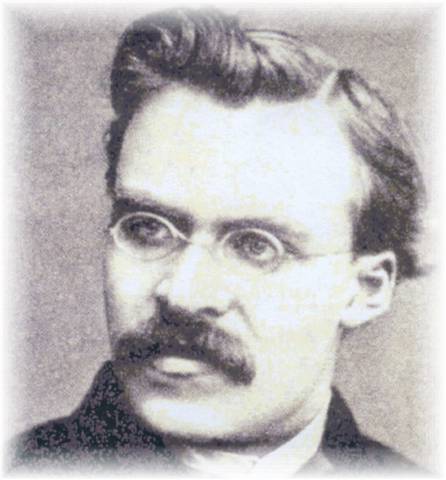
Saaleck Castle (Friedrich Nietzsche)

Friedrich Nietzsche (1844-1900) is one of the most maligned philosophers of all time. Few who have but heard his name realise that he was staunchly opposed to the anti-Semitism of his time in Germany, even falling out with both his publisher and sister because of it, but both survived him and misappropriated his work. His final act before descending into madness was to come to the rescue of a horse who was being beaten by its owner. It may be that the Nietzschean ideal of the superman is also a man of great compassion, harnessing this to creative ends, but it would require a very careful reading to cut through the irony and know for sure what he meant, if he meant anything at all. His purpose was rather to make one think, and in this regard many of the great philosophers of the 20th century cite him as an inspiration. It is said that his writing in German is akin to poetry, and it turns out he was a poet also. A complete literal translation of all his poems was released only in 2010 called "The Peacock & The Buffalo".  I would like to share here my verse translations of some snippets of his work and of his poem "Saaleck Castle". These were all mostly written in his younger years.


Phoenix

Standing naked on a hill,
Night’s dark garment draws about.
From this great height, behold still
Blooming meadows stretching out.
There an eagle floats down – look!
With such youthful zest to throw
Itself into the golden brook
Rising in eternal glow.

Old Coin

I am like an old coin, turned green with moss.
Once it sparkled like a jewel, now its face
Doubt-furrowed, deep and hard, there creeps across
Life’s grey dirt, frozen, seeking its embrace.


The Ladder (an allusion to Plato's "Symposium")

I must climb up a mighty stair,
But every step I hear despair,
“How cruel you are, are we mere stones,
That you should climb over our bones?”


For Dancers

Smooth ice
Is paradise
For those with figures nice
Whose dancing skills suffice.


Saaleck Castle

Tranquil evening peace sways
Over mountain and dell.
The sun with its last rays,
Smiles down in sweet farewell.

The heights around glow red
Shimmering splendid glory
And knights rise from the dead
Hark! One feels their story.

The castle comes alive
With merry to and fro,
And the trees laugh and jive
With a joyous echo.

Within resound the songs
Of hunting, war and wine
Clear horns and booming gongs
And drumming as men dine.

The sun has sunk away
No more the merry ball,
Stillness and deathly grey
Embrace the anxious hall.

Saaleck lies so sad
Upon a barren knoll
When I see it, deep within,
I shudder in my soul.

Sunday, 5 June 2011

Shelley - Invocation


RARELY, rarely, comest thou,
Spirit of Delight!
Wherefore hast thou left me now
Many a day and night?
Many a weary night and day
'Tis since thou art fled away.

How shall ever one like me
Win thee back again?
With the joyous and the free
Thou wilt scoff at pain.
Spirit false! thou hast forgot
All but those who need thee not.

As a lizard with the shade
Of a trembling leaf,
Thou with sorrow art dismay'd;
Even the sighs of grief
Reproach thee, that thou art not near,
And reproach thou wilt not hear.

Let me set my mournful ditty
To a merry measure;
Thou wilt never come for pity,
Thou wilt come for pleasure:
Pity then will cut away
Those cruel wings, and thou wilt stay.

I love all that thou lovest,
Spirit of Delight!
The fresh earth in new leaves drest
And the starry night;
Autumn evening, and the morn
When the golden mists are born.

I love snow, and all the forms
Of the radiant frost;
I love waves, and winds, and storms,
Everything almost
Which is Nature's, and may be
Untainted by man's misery.

I love tranquil solitude,
And such society
As is quiet, wise, and good;
Between thee and me
What diff'rence? but thou dost possess
The things I seek, not love them less.

I love Love—though he has wings,
And like light can flee,
But above all other things,
Spirit, I love thee—
Thou art love and life! O come!
Make once more my heart thy home!

Friday, 27 May 2011

Romances of Marceline Desbordes-Valmore

One of the most celebrated poets of 19th century French literature, an inspiration to Baudelaire and the whole symbolist movement in poetry, I would like to share my translations of some of the romantic poetry of Marceline Desbordes-Valmore: actress, poet, writer and great lady of letters, born just before the French Revolution. Only a handful of her poems seem to have been translated and published before in English, and only the first of the following as far as I can tell (see here for a lovely alternative translation, blog and photos of the poet), but that is sure to change in the coming years because the omission is so glaring. Having said that, it is understandable that they haven't been translated: her poems are often songs and indeed many were written set to music, so it isn't easy to capture their spirit and the playful language and rhyming. We can but do our best!

These were all written in the early 1800s. If you click on the titles, they link to the original French. I'd love to hear which ones you like, suggested improvements, corrections etc.


Separated Hearts

Don’t write. I’m sad and pensive, burning up my fire.
Bright summers without you are like a darkened room.
My arms clasped tight again, but not with their desire.
Beating at my heart is like beating at a tomb.
          Do not write!

Don’t write. Let us learn only to die to our flame.
Ask but God… ask but yourself, if I loved you!
Plunged into your absence, to know you feel the same
Is to hear of heaven, yet never climb there too.
          Do not write!

Don’t write. I fear your presence, lest my memory sink
So long she kept your voice, so often she recalls.
Don’t take me to the fountainhead where I can’t drink
The living portrait painted by a lover’s scrawls.
          Do not write!

Don’t write those sweet words which I dare no longer read
I feel your voice smothering them over my heart
And burnished across your smile, engulfing my need.
It seems that every kiss would stamp them on my heart.
          Do not write!


Confession Allowed

Come, my dear Olivier, I have three words to say to you
My mother has allowed it, she said they’d bring you joy.
Well, I dare no longer, but tell me, can you read?
My mother has allowed it, look into my eyes.

Here you see my downcast eyes. God! how I’m confused!
My cheeks have gone red. Can you see, it’s because I’m shy.
My mother has allowed it; you will be excused;
While I’m blushing, put your hand upon my heart.

How your air of worry torments and touches me!
These three words are so delicate! my heart says them so well!
You do not understand? take them then on my mouth;
I’ll close my eyes, take, but don’t talk to me about them.


First Love

Do you remember that young friend
With tender eyes, her expression wise and sweet?
Almost, alas! at the spring of her life,
Her heart feeling that it was made for you.

About to make a confession, about to make an empty promise,
Still so young, one knows them not.
Her soul pure and drunk with passion
Delivering itself without shame or struggle.

She lost her darling idol.
Happiness so sweet lasted but a day!
She is no more at the spring of her life.
She is already in love for the first time.


The Waking    ...a better rhyming translation in my next post!

On this bed of reeds, can I fall asleep again?
I feel the fragrant air surrounding your body.
Your mouth is a flower whose perfume devours:
Come closer, oh my treasure! and burn only me.
          Wake up! Wake yourself up!

But this breath of love, this kiss that I long for
On your lips, I still dare not relish it
With your heart’s consent, my life would double
Your sleep goes on, because of you I’m dying.
          I dare not relish it.

Come under the banana trees, we shall find some shade.
The birds will sing at the sight of our lovers’ play
The sun is jealous, it hides itself behind a cloud
And it is in your eyes only that I seek the day.
          Come set alight my love.

No, no you sleep no more, you share my flame
Your kisses are the honey that produces our blossom
Your heart lets out a sigh; will you come look for my spirit?
Here it is on my mouth; it would dry out your tears.
          Hide me under blossom.


To Poetry

O sweet Poetry!
Covered in flowers and lace
The sad dream
That makes tears run down my face;
My tender soul
Hurts still with its deceit.
I want to wait no more
For my amorous pleasures.

Give to the lines of my lyre
A good-natured colour,
Your grace to my madness,
Your charm to my heartache.
Would that the dark cloud
That cloaks my destiny
Flee like a shadow
At your divine sign.

Be ever attentive
To my mournful songs;
With a fearful modesty
Sheathe my confessions.
Hide that burning Error
That threatens my happiness:
But, O God! how slow she is
To leave my heart.

Sunday, 9 January 2011

Delta Goodrem - Running Away

Why this creeping sadness that overcomes me?
Much better this than anger or indifference, but why?
What does it signal, is it I or is another suffering?
I bend double with a sneeze that reverberates,
Then silence returns, but for the ticking clock
And the sound of my blue pen tracing these lines
Of silent grief without a reason why –
I hope you are well, my blessings to you always.

–okei


Really, I'm fine. And I hope you are too... Just a strange post-holiday feeling.

Here's a song that came into my head after I wrote this...


Running Away

I close my eyes and make a wish for
Inner peace and tranquillity inside
My mind I feel it's changing
Breaking down the defences of my heart
It's like a new adventure
And this is my life
No longer know the girl inside
The stranger in my mind

I'm running away. Running away from you
Though I beg you to stay. I'm running away from you
I'm running away. From predictable
Miss reliable. So methodical
Wanna be individual. And original
So radical. And desirable

Put a message in a bottle
Watch it sail across the ocean blue
So free of limitations
A vision I can only fantasize
I'm floating in a new direction
As this is my life

No longer know the girl inside
The stranger in my mind

Thursday, 6 January 2011

In Truth, Breaking Free


The image
is
"Sower of Systems"
by
George Frederic Watts.


Notice the cloaked figure that fills the picture. It is supposed to be a symbolic representation of the moment of creation. But because of the overall haziness, it is at the crossroads between symbolism and abstract art.

As for the poem, I have only the vaguest idea what it means, so any help you can give me in that regard would be most welcome!


On the River Nile four thousand miles from home,
I weep for time lost and lands I'll never roam.
"Bear patiently," she told me, "Don't lose your heart."
But fate, slow and painful, tore our hands apart.
Reason has no answer to the vital lust
That drives us ever onwards from dust to dust.
Warm breath lights a cold fire, hard graft tills soft earth,
Tenderness stirs resolve – do we know their worth?
A painting of creation hangs on my wall.
I dream, reflecting on life before the fall.
But wake! Truth's light dawns bright as I hear your call!

–okei

Tuesday, 14 September 2010

Certified Copy (Copie Conforme; France, 2010)


Rating:★★★★
Category:Movies
Genre: Other
If this film had been directed by Eric Rohmer, I would be bowled over in admiration, but just because it's by an Iranian director whom I’d never heard of, I’m less impressed. It turns out to be ignorance on my part, for Kiarostami is a well known and highly respected master of his art. To what extent is our appraisal of a work affected by its source?

The main character is an English author who’s just written a book called “Certified Copy” which he is promoting in Italy where its idea was born. The book sets out to prove the contentious claim that an authentic copy is of just as great a value as the original work of art. For art is a subjective personal experience, and the copy would give just as great a pleasure as the original, so long as the viewer looks up in awe as if it were original.

So there’s an admiration for the one who can look on the world with simple satisfaction. For example, what if a man stranded on a desert island came upon a bronze lamp and a genie appeared granting him three wishes? What would he ask for? Coincidentally, I’d asked exactly this question on Yahoo Answers just a couple of days previously! His first wish is for a self-replenishing cup of coke. He tests it out, taking a long cool drink, and indeed it replenishes. “Hurry up!” says the genie, “What is your second wish?” Delighted, the man orders two more!

This movie has been described as a more mature version of Before Sunrise and Before Sunset. It simply follows the two main protagonists, the English author and his French admirer, played by Juliette Binoche, as they seemingly aimlessly wander about a village in rural Tuscany, talking to each other in a mixture of languages, mainly English. It’s a talky movie, the kind I like, and that most people find very boring, though there is rather a Pirandello-twist of the genre of which it is a copy.

Themes of uniqueness, identity, memory and disconnectedness pervade. But on the other side is a dream of harmony, of union and of love that never changes. “For man, life is his work.” says the barmaid sweepingly, “For woman, life is for living in all its aspects in the knowledge that she is loved.” How then to bridge the separation? Isn’t love more than just knowledge? More than proofs, more than communications, more even than simple heartfelt gestures like a hand upon the shoulder... “If only we could be more understanding of each other’s weaknesses,” the writer muses as he sits alone, head bowed, but the faultline lies much deeper than understanding.

Maybe the answer lies in art…and imagination.

Saturday, 4 September 2010

Third Noble Truth (Interactive): which drinks make you drunk?

This is a continuation of the following earlier posts on the First and Second Noble Truths:


The first of the five faculties in Buddhism is faith. It is the starting point of every religious and spiritual tradition. It is not blind faith, but conviction or self-confidence. It is the ability to make a choice. 

That which is sweet first is bitter,
That which is bitter first is sweet.
To each a choice, then it all depends
On effort and unflagging will
To reach the city of your choice.

–Lalla

The city of our choice is not something concrete, or an intention of the ego. Rather, it is abstract, pure intent, a choice of the heart. Choices of the heart are always abstract. The path of heart may be difficult at first – there is nothing concrete to hold onto (it is a letting go) – but in the long run it will always turn out more pleasant.

When this faculty of faith is developed, it becomes a powerful force. It becomes the first power. To do good is to be faithful to abstract intent. To do evil is to be waylaid and distracted along the path.

And what causes us to be waylaid?

Before we try to answer that question, we recall the Buddhist paradigm (discussed in the Interactive First Noble Truth) of first examining the nature, before turning to the origin or cause, then looking at the purpose or consequence, and finally at the way to proceed. What is the nature of being waylaid? We might recall the five hindrances of day-dreaming, boredom, doubt, ill-will and agitation. But, in short, it is the interference of the mind that causes us to deviate from the straight path. Metaphorically, it is drunkenness. And what causes drunkenness? It is drink. With wisdom of which drinks have this effect, what is the consequence of abstaining from those drinks? It is sobriety or clarity. And finally, the way to proceed along with faith, with wisdom and with “effort and unflagging will”, is clearly to be mindful as to what we drink.

We can’t go to two cities at once! That would be called “seeing double”, a true sign of drunkenness. It is a cliché of Zen: when you do X, just do X; when you do Y, just do Y. Some students after long instruction of this by their Zen master were shocked to see him eating breakfast and reading the newspaper at the same time. “What’s the problem?” he replied to them. “When you eat and read, just eat and read.” Right then, that’s all the jokes done with. The rest will be all suffering. Actually, the cessation of suffering. It's no joking matter, lol.

Even if we have wisdom and refrain from the drink that causes drunkenness, still the craving for that drink remains and will cause suffering if not addressed. The craving is itself an interference of the mind, or a drink that we’d do well to refrain from. As we learnt in the Interactive Second Noble Truth, we must go to the root, and the root of that which disturbs peace of mind, or gives rise to dukkha, is tanha, the thirst and attachment to those drinks that lead us away from our city into the vineyards of drunkenness.

But again we ask, which drinks are these that lead us astray? 

Because this wisdom will get us a long way to avoiding them. If we recognize something as an unwanted attachment or addiction, then this recognition is the first step in helping us to be rid of it. It will give us the gift of disillusionment in that which causes us to suffer. If it is a strong addiction though, disillusionment won’t necessarily be enough to change our behaviour. Then we might try transference, and swap our craving for one drink with craving for another. We do this all the time in most interesting ways, for example doing things which give us pleasure to cancel or make up for that which gives us pain. We can all see this in our towns, how the evening and weekend binges release all the tension built up over the course of the day and week. Or at a more moderate level, how food and exercise are great relievers of stress. This is all well and good, but we may come to notice in time how pleasure and pain create patterns, some of which may distract us from the city of our choice. And the drunkenness borne of pleasure is the harder of the two to shake… because it feels so good! What if we didn’t or couldn’t transfer our craving or act on it in some way? I would call this “sucking it up” or cessation. Our capacity for cessation is much greater than we imagine it to be. But if the pain is too great, or we lack resolve, we might not succeed and this might discourage us completely. Our response might be avoidance, escape, sleep, cessation from the path altogether. This may do as a stop-gap to buy us time, but ultimately we must embrace life and face up to our cravings. And whether we employ disillusionment, transference or cessation, there is a seed of wisdom whose contemplation is at the heart of the Third Noble Truth: in the fullness of time, all that arises will also cease.

In the game of intent, we must surrender the battles that fuel our drunkenness – neither win them nor lose them, but realize their cessation – in order to win the war. Only when our desire aligns perfectly with our intent, when all other cravings are vanquished or by transference replaced by our true desire, all mind-addictions ceased or replaced by the addiction to Dhamma, and all our love unified in the name of Love, then are we truly on our way to the city of our choice!

For the third time I ask, which are these battles which fuel our drunken state and waste our energy?

I would say: all that does not belong to the city of our choice, all that is not of Truth, all that is not of the Heart, all that is not the drink of the Beloved. Could I be less abstract? More practically useful? I will think more on it… how about you? The questions I’ve been sizing up in this blog may be summarized as follows:

1. What is the city of your choice?

2. What leads you away from the city of your choice?

3. How do you vanquish that which leads you away from the city of your choice?

Let the real work begin! Buddha’s Third Noble Truth encourages us that absolute success is possible and may we set about realizing it. May all answers that you seek come to you, and may they be an expression of “heart”.

I pass the blog over to you! As always, your criticism and feedback is dearly welcomed, and I look forward to hearing your thoughts on these questions.


Thursday, 2 September 2010

Mortal Love

Waiting in Love's maddening strife,
With what great sorrows she is fraught!
Because her ends are not cut short,
She will be cutting short my life.

Your cruelty on this mortal plane
Against what's well-deserved to be
Is that you have withheld from me
The remedy to cure my pain.

And Glory's long-expected boon
Serves more to anguish than elate;
My life grows shorter as I wait —
Why won't its end be coming soon?

— from 16th century Spain

The image is 'La Belle Dame Sans Merci' by Arthur Hughes.

Monday, 2 August 2010

Second Noble Truth (Interactive): why does life suck sometimes?

The Four Noble Truths form the basis of Buddha's philosophy. The purpose is purely ethical, grounded in subjective experience, so instead of studying the nature of life and reality objectively (in terms of scientific laws, random phenomena, natural selection etc.), we study our experience.

The First Noble Truth (discussed earlier here) is about understanding imperfection and suffering. The Second Noble Truth asks us to look into the causes of imperfection and suffering… So let us explore the roots of suffering. I've included my answers, and am continuing to investigate... The hope is that we can arrive at our own understanding independently of our knowledge of what the Second Noble Truth says and then compare and drill deeper. 

1. What makes you mad?
What makes me mad is human stupidity and lack of consideration for the lives of others. Thoughtless selfishness I can forgive because we all need to become more mindful, learn from our mistakes and do our best not to repeat them, but at least the intention must be there to be acting for the best. They say the road to hell is paved with good intentions, but I’ve always believed that every road is. Ok, so we need to learn to be more mindful, but also forgive ourselves and others when we err. What makes me mad though is the intentional setting up of “us and them” which is a betrayal of the belief in equality, often motivated by power and greed, and accompanied by the restrictions of people’s freedoms and the treatment of individuals as statistics to be labelled and quantified and their approval maximized. Yes, what makes me mad is the betrayal of the three cornerstones of the democratic ideal, of equality, freedom and compassion, and of those who sow seeds of fear and hate that contribute to their degradation.

2. What makes you sad?
What makes me sad is that through the prolonged exposure of things that make us mad, we have developed a tolerance for them, almost become immune. This would make me mad also if it weren’t for the fact that I see it in myself and I find it completely understandable. What makes me sad is how children always have such high ideals and when they become adults they betray those ideals. What makes me sad is the powerlessness of the individual in the face of cruel reality, the short-sightedness of collective humanity, the inevitability of death and the loss of that which we hold dear.

3. What makes you frustrated?
What makes me frustrated is lack of “flow”. When life flows, what does that word “frustration” mean? It doesn’t exist! What obstructs the flow? It is difficulty, tiredness, uncertainty, confusion, helplessness, shame, distraction. And what keeps the river of life flowing over and around these obstacles of frustration with harmonious music. It is calm, energy, wisdom, understanding, power, love, intent. With greater mindfulness, perhaps we can catch the frustration before it arises. With less mindfulness, perhaps we can catch it after it arises. But if we do not catch it, then in time it sets and becomes a tributary of the river of life itself. I don’t even know why I’m frustrated this very instant, but I know that I am! It is my frustration of not understanding the Second Noble Truth, wanting to understand it better, that has driven me to write this blog. So perhaps frustration serves a purpose after all… 

4. What is your response to frustration?
Avoidance! Escape into thinking about something else without frustration, listening to music, reading, sleep, in the hope that the mind can rest, and return to find the state of flow that was lost. Sometimes this can work. Resting too long, the frustration can be forgotten, but it hasn’t necessarily gone away. Sooner rather than later, it must be actively addressed or it will become like a silent sadness never spoken or a gnawing pain whose cause of suffering to our life we fail to even recognize.

5. What is bothering you that you do not want to talk about?
I don’t want to talk about it! For sure there are plenty of things, but what is the fundamental issue at the core, not something external, but something which lies within, something perhaps deeply buried about which everything revolves? What is the source of your shame and your pain? What do you not want to talk about? Do you even have a clue? Perhaps this is something to meditate on, in stillness find the answer and contemplate how to address it. It would sure be useful to know…

6. What should the next question be?


I hand the blog over to you! You can answer any way you like, but let it be an expression of "desire"... oops, did I spill the beans there? I want it to come from you!

Monday, 19 July 2010

First Noble Truth (Interactive): what is the nature of our experience of life?

The First Noble Truth is the first of four Truths that the Buddha taught in his very first discourse after enlightenment, now known as the Dhammacakkappavattana Sutta, literally “the discourse that sets the vehicle of teaching in motion”. These four truths seek to awaken us to an understanding of (1) the nature of life, (2) the origin of life, (3) the purpose of life, and (4) the way of fulfilling life’s purpose. 

This quartet of nature, origin, purpose and way is thus a paradigm of Buddhist philosophy. The first object of enquiry might have been “the world”, but Buddha like Descartes two thousand years later saw the need to ground his philosophy in subjective experience, in “life”.

1. What, in your opinion, is the foundation ground of knowledge that, through its understanding, all else will fall into place? 

God? The universe? Life? 

Unlike traditional Western philosophy, Buddha’s epistemological quest is intensely spiritual both in its purpose and its process. Buddha showed little interest in metaphysics or speculations in general except where they were of use in helping accomplish the difficult and personal process of awakening to the truth of life. The Four Noble Truths are found not in the statements themselves, but in our meditative contemplation and understanding of them. This is described in the teaching as a threefold process, though there is actually a zeroth stage that is taken for granted: (0) the opening the heart to the discovery of truth, (1) knowing or at least believing that we know the truth, (2) acting on the truth, putting into practicing what we know, and (3) awakening, for once we are fully awakened to a truth, then the truth acts on us. 

This quartet of being open to, knowing, acting on and being truth thus forms a paradigm for Buddhist ethics. So, the ethical quest is founded by truth, and conversely, we shall see on reading the Four Noble Truths that the seeds of truth are planted in the noble ground of ethics. The Four Noble Truths are so-called because the process of engaging with them is ennobling. And this is the purpose of this blog.

2. What, in your opinion, is the nature of our experience that we call life?

Consciousness? Growth? Unpredictability? Imperfection? Insubstantiality? Fun?


I pass the blog over to you! You can answer in any way you like, but let it be an expression of "life"... I want it to come from you.

Second Noble Truth (Interactive) follows here:
http://itsokei.blogspot.co.uk/2016/12/second-noble-truth-interactive-why-is.html